
Dubai Real Estate Hits 327 Billion AED: How to Strategically Enter the Market Before the Supply Wave
Imagine trying to visualize 327 billion Dirhams. That is approximately 89 billion US dollars. This is the staggering volume of capital the Dubai real estate market absorbed in a mere six months. To put that massive figure into strict economic perspective, it surpasses the annual gross domestic product of several medium-sized sovereign nations. We are no longer witnessing a cyclical boom driven by regional liquidity; we are actively observing a historic recalibration of global wealth. The era of Dubai being viewed as a speculative, short-term playground has officially ended. Today, the emirate has cemented its status as a foundational pillar for international asset management, drawing in institutional capital, family offices, and ultra-high-net-worth individuals at an unprecedented velocity.
Why are we seeing these monumental numbers print right now?
You must look at the global macroeconomic landscape to understand the local surge. Western Europe is currently grappling with sluggish economic growth, stringent regulatory environments, and high taxation regimes. The United States continues to navigate a highly complex cycle of inflation, political polarization, and shifting interest rate dynamics. Amidst this global friction, the United Arab Emirates offers an oasis of fiscal predictability, zero personal income tax, and unparalleled physical security. The capital flowing into the Dubai real estate market is no longer just buying luxury holiday homes for winter escapes. These investors are moving their corporate headquarters, relocating their executive teams, and migrating their families. This deep structural migration is not an accident; it is actively underwritten and propelled by the visionary D33 economic agenda, which systematically aims to double the size of Dubai’s economy over the next decade.
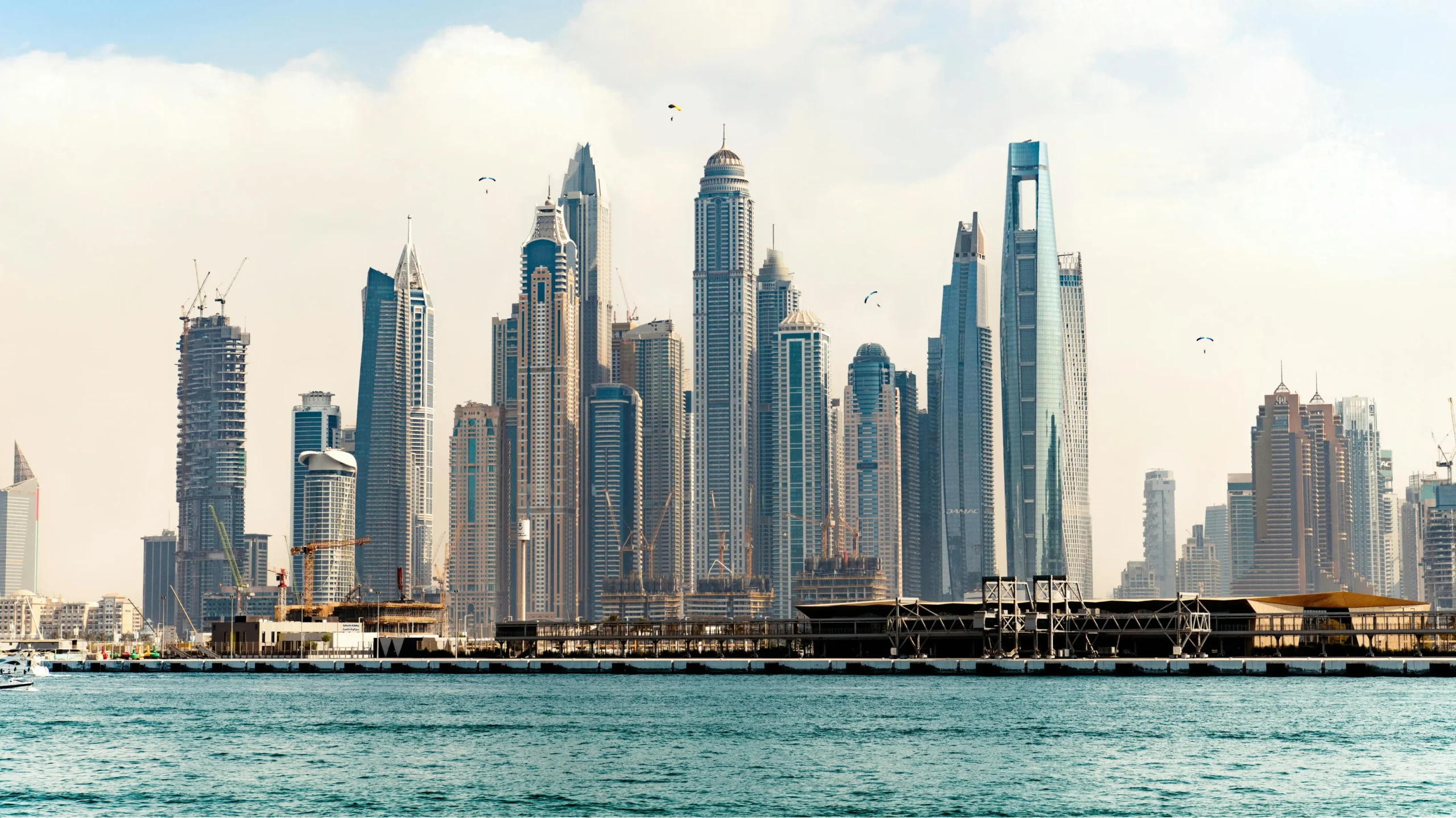
But every historic bull run inevitably invites a shadow of skepticism from seasoned financial analysts. Market observers looking at the dense concentration of construction cranes across the skyline are rightly asking tough questions about the impending supply wave. Conservative estimates suggest that tens of thousands of new residential units are slated for official handover between the end of 2025 and 2028. Does this massive pipeline guarantee an oversupply crisis that will crash rental yields and erode capital values? The answer requires a highly surgical dissection of the market rather than a lazy blanket assumption. Not all real estate is created equal in this new, mature cycle. The legitimate threat of oversupply is heavily concentrated in generic, undifferentiated apartment blocks lacking community infrastructure or brand identity. Conversely, the ultra-luxury segment, waterfront properties, and premium branded residences face a chronic and sustained undersupply, driven by the relentless, compounding influx of global millionaires who demand immediate occupancy.
Entering the market strategically before this anticipated supply peaks requires completely abandoning the outdated “buy and flip” mentality. You can no longer simply purchase a unit on paper today and expect a guaranteed thirty percent premium the moment the keys are handed over. The margins have tightened, and the consumer base has matured dramatically. Your entire investment philosophy must pivot toward end-user appeal. When the new supply eventually hits the market, renters and secondary buyers will suddenly have the luxury of choice. They will ruthlessly bypass mediocre developments and choose communities that offer a seamless, integrated lifestyle encompassing remote work facilities, premium leisure amenities, and holistic wellness centers. Properties situated near major future transit hubs, specifically those aligning with the massive, multi-billion-dollar expansion of Al Maktoum International Airport and the broader Dubai South logistics corridor, represent strategic fortresses against any potential supply dilution.
The primary engine driving that headline 327 billion Dirham figure has undoubtedly been the off-plan sector. Developers have mastered the sophisticated art of capital attraction through aggressive global marketing campaigns and highly flexible, post-handover payment structures. However, allocating your capital into this specific tranche demands intense, institutional-grade due diligence. You are essentially extending unsecured credit to a developer based on architectural renders and promises. To genuinely protect your investment, you must rigorously scrutinize the developer’s historical delivery record, balance sheet health, and post-handover facility management quality, not just their glossy marketing brochures. While the stringent regulatory frameworks established by the Dubai Land Department and RERA—particularly the ironclad escrow account mandates—have drastically reduced catastrophic completion risks, the smart money always looks beyond basic legal compliance. They actively seek out developers who consistently deliver above the promised specifications, thereby commanding immediate premium valuations upon handover. Understanding these critical nuances is exactly why navigating [INTERNAL LINK: Dubai off-plan properties] requires a highly sophisticated analytical approach rather than emotional buying.
Let us transition to the raw mathematics of rental yields, which remains the ultimate litmus test for any property investment. Historically, the emirate has offered highly lucrative gross yields often exceeding seven or eight percent. As capital values have surged aggressively over the past two years, we have witnessed a natural, mathematical compression of these yields in prime, established areas like Palm Jumeirah or Downtown Dubai. To capture true Alpha in the current landscape, investors must aggressively pivot their radar toward emerging professional hubs. Neighborhoods such as Jumeirah Village Circle, Dubai Silicon Oasis, and Arjan are currently absorbing the vast bulk of the rapidly expanding middle-class and tech-focused workforce. These critical demographic segments prioritize housing affordability, community retail, and highway connectivity over beachfront views. By surgically targeting these specific micro-markets, an astute investor can still lock in net yields that drastically outperform traditional global financial centers like London or New York. Maximizing your [INTERNAL LINK: UAE property yield] is no longer a vanity game of buying the most expensive, highly publicized asset; it is a mathematical discipline of buying the most capital-efficient one.
We cannot analyze the Dubai real estate trajectory in a vacuum; we must constantly monitor the Federal Reserve in Washington. Because the UAE Dirham is firmly pegged to the US Dollar, the macroeconomic monetary policy decisions made in the United States ripple instantly through the banking halls of Dubai and Abu Dhabi. As the global economy transitions firmly into a long-term rate-cutting cycle, the cost of borrowing locally decreases in tandem. Cheaper mortgages are the absolute ultimate catalyst for domestic end-user demand. Thousands of expatriate professionals currently paying inflated, premium rents will view lower interest rates as the definitive signal to cross the threshold into permanent homeownership. This localized, domestic purchasing power acts as a massive, structural shock absorber against the influx of new developer supply. When local residents buy homes to actually live in them, they permanently remove those units from the speculative trading pool, thereby stabilizing the entire baseline of the market structure.
Furthermore, the fundamental definition of what constitutes a desirable, premium asset is undergoing a profound global metamorphosis. The post-pandemic shift toward remote, hybrid work models and digital nomadism has permanently altered human spatial requirements. Investors blindly dumping capital into cramped, poorly lit studios might find themselves highly exposed and struggling with vacancy rates when the supply wave crests. The truly resilient assets in the coming decade are those offering dedicated private workspaces, expansive outdoor balconies, and immediate pedestrian access to green environments. Townhouses and standalone villas have consistently outperformed standard apartments in capital appreciation precisely because they directly cater to this permanent structural shift in human behavior. If you are preparing to deploy serious capital into the market right now, you must design your portfolio to meet the exacting lifestyle demands of the 2026 consumer, not the speculative gambler of 2019.
We are also witnessing the rapid, irreversible institutionalization of the Dubai property sector. The aggressive entry of Real Estate Investment Trusts (REITs), heavy sovereign wealth fund allocations, and massive family office capital deployments means that the absolute floor of the market is significantly higher and more robust than in any previous cycle. These heavy-weight institutional entities do not panic sell during minor quarterly price corrections. They acquire premium assets for multi-generational wealth preservation and long-term yield generation. This institutional bedrock provides a thick layer of macroeconomic insulation that smart retail investors can leverage to their advantage. By meticulously analyzing exactly where these major players are deploying their billions—such as advanced logistics hubs, premium Grade-A commercial spaces, and integrated mixed-use mega-developments—individual investors can effectively shadow the smart money and drastically mitigate their own downside risk.
Cracking the historic 327 billion Dirham milestone is absolutely not the finale of the Dubai real estate narrative; it is merely the opening chapter of its fully mature, globally integrated phase. The upcoming supply wave is a mathematical reality, but it is a wave that will ruthlessly wash away the mediocre while permanently elevating the exceptional. Entering this highly dynamic market successfully requires a total departure from emotional, hype-driven investing and a strict, disciplined adherence to data-driven, hyper-local analysis. You must buy properties that appeal to the actual end-user, hedge your bets alongside massive government infrastructure developments, and intelligently leverage the shifting macroeconomic winds of lower global interest rates. The window of opportunity remains exceptionally wide open for those who approach the market with the cold precision of a hedge fund manager rather than the blind enthusiasm of a passing tourist.